Choosing a Bullet Sex Toy supplier involves more than comparing unit prices. Global buyers also need to assess product consistency, material specifications, production capacity, and communication. A polished catalogue can look convincing, but sample quality and clear documentation matter more. Details matter.
This guide introduces ten suppliers for buyers exploring manufacturing and wholesale options. It highlights practical points to compare, including product range, customization, minimum order quantities, quality-control processes, packaging, and estimated lead times. For example, buyers can ask how silicone components are identified, how finished products are inspected, and whether packaging artwork can be adapted for a target market. These questions help turn a broad supplier search into a more useful shortlist.
Supplier profiles and capabilities can change. A company’s public claims should not replace direct checks, product samples, and written specifications. Not every supplier fits. Some may offer flexible design support, while others may be better suited to larger, repeat orders. Buyers should also confirm shipping terms, export documents, and applicable product requirements with qualified professionals before placing an order. This article is a starting point, not an endorsement or a guarantee of performance. That distinction matters, and it can be easy to overlook when a listing looks complete. Compare evidence, ask specific questions, and choose a partner whose answers remain consistent from the first inquiry to the final shipment.
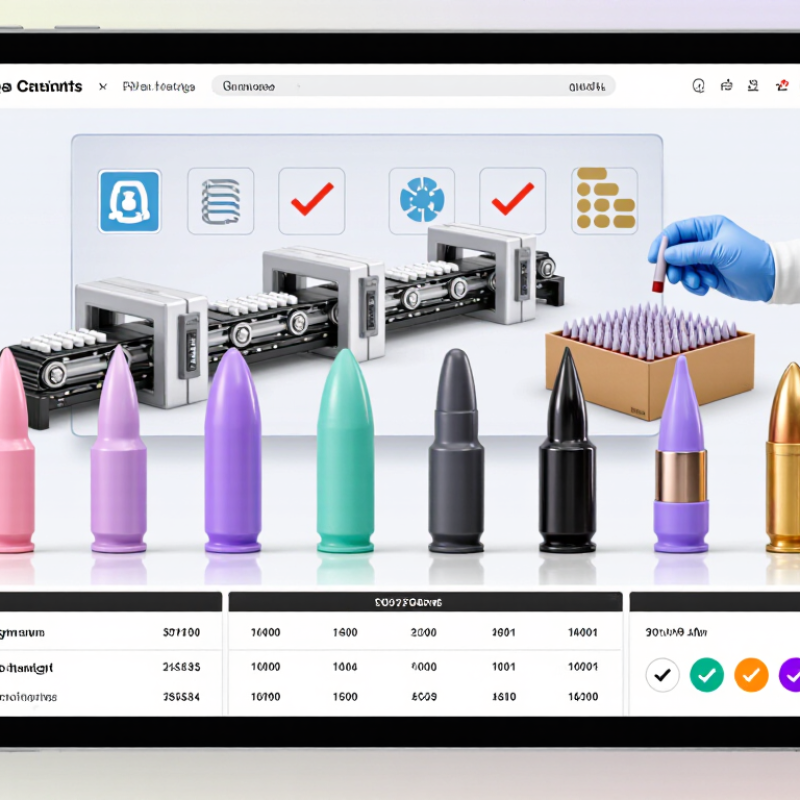
China’s bullet vibrator sector includes compact, single-speed models and designs with several vibration patterns. Many products use a soft-touch outer layer over a motor housing, while others have a firm ABS body. Power options commonly include replaceable batteries or USB charging. Some designs add a flexible neck, magnetic controls, or a small remote. These features affect comfort, cleaning, packaging, and shipping requirements.
The supplier landscape includes factories focused on manufacturing, OEM and ODM providers, and trading companies that coordinate multiple product lines. Their capabilities can differ considerably. A polished catalog does not confirm consistent motor performance or reliable material claims. Buyers should compare samples, request clear specifications, and review quality-control procedures. Check charging details, noise levels, surface finish, and stated water-resistance limits. Small details matter. Ask how production batches are inspected, and confirm that product documents match the exact model being quoted.
ISO 3533:2021 sets design and safety requirements for sex toys intended to contact genitalia, the anus, or nipples. Use it as a product-screening reference, not proof that a supplier is automatically certified. Ask each candidate for reports tied to the exact model, materials, and production version you plan to order. Ask for proof.
Review material records, risk assessments, user instructions, and traceability documents. Check whether reports identify the tested product clearly, rather than describing a similar item. For a bullet-shaped device, inspect sample seams, controls, charging points, and any detachable parts. These details can reveal gaps that a polished catalogue hides. Electrical models may need additional safety evidence relevant to their design.
Compare suppliers on how clearly they answer technical questions and handle corrective actions. Request records showing how production batches are identified and how defects are investigated. A low price or attractive sample is not enough. Documents can also be incomplete, outdated, or poorly matched to the product. Keep that limitation in mind, and verify claims with qualified testing where risk warrants it. A careful shortlist should reflect evidence quality, not marketing confidence.
For global buyers, the 0.1% w/w SVHC threshold is a material-level check, not a shortcut based on the finished product’s total weight. A bullet-shaped product may contain silicone, ABS, metal contacts, coatings, and adhesive. Each part deserves its own material record. Under REACH Article 33, suppliers must communicate information when a Candidate List substance exceeds 0.1% by weight in an article. ECHA’s January 2025 Candidate List update recorded 247 entries, making current list checks essential. The list changes.
Ask suppliers for bills of materials, declarations tied to specific parts, and test reports that identify methods and sample dates. A generic “REACH compliant” statement is weak evidence. ECHA guidance also makes clear that complex objects can contain smaller articles, so averaging a substance across the whole product may conceal a threshold exceedance. Choose testing methods for the suspected substance: elemental screening cannot identify every organic chemical. Keep batch records, too. A spreadsheet can still be wrong. I have seen paperwork look complete while a coating was missing from the material list; that is exactly where a careful review should pause. When suppliers change pigments, adhesives, or production sites, reassess the affected parts rather than relying on an old certificate.
A 10-point, brand-neutral supplier screening matrix for global buyers. It presents verifiable compliance checks, not a ranked directory or claims about individual suppliers.
| No. | Supplier Screening Area | What Buyers Should Request or Check | Relevant Fact or Decision Point |
|---|---|---|---|
| 1 | Article and component mapping | Request a bill of materials identifying the product’s separate articles and components, such as the housing, buttons, cable, battery, coatings, and packaging. | For REACH communication duties, the 0.1% w/w SVHC threshold is assessed for an article. A complex product may contain multiple articles; assessing only the weight of the finished product can miss a component-level issue. |
| 2 | SVHC concentration check | Ask for a material-specific declaration stating whether any Candidate List substance is present above 0.1% w/w in any relevant article. | Under REACH Article 33, the relevant threshold is a concentration greater than 0.1% by weight in an article. The threshold is not a general limit for every chemical in every product. |
| 3 | Candidate List version | Check that the supplier identifies the European Chemicals Agency (ECHA) Candidate List version or review date used for its declaration. | The Candidate List can be updated. A declaration should identify the list version or date so buyers can assess whether it reflects the requirements relevant to their market placement. |
| 4 | Article 33 information | Request a process for passing relevant SVHC information through the supply chain, including the substance name and sufficient safe-use information where required. | When an article contains a Candidate List SVHC above 0.1% w/w, REACH Article 33 requires information to be provided to professional recipients. Consumers may request information, which must be supplied within 45 days. |
| 5 | SCIP database readiness | For products placed on the EU market, ask whether the responsible EU actor has assessed applicable SCIP submission duties and can provide the relevant submission details when required. | Under the EU Waste Framework Directive, suppliers of articles containing Candidate List SVHCs above 0.1% w/w have SCIP notification duties. SCIP is separate from a laboratory test report. |
| 6 | Material identification | Request the exact material grades and locations for skin-contact parts, including any elastomers, plastics, and surface finishes; do not rely on broad labels alone. | Terms such as “silicone,” “ABS,” or “TPE” identify material categories but do not by themselves prove composition, purity, REACH compliance, or suitability for a particular use. |
| 7 | Test report quality | Review the report’s sample description, tested components, test methods, date, laboratory identity, and the substances or regulatory requirements covered. | A test report applies to the samples and analytes described in that report. A report that does not identify the tested material or scope cannot, by itself, establish compliance for every component or production batch. |
| 8 | Colorants, coatings, adhesives, and inks | Ask suppliers to include colored materials and applied finishes in the component declaration and to explain how formulation changes are reviewed. | Substances can be present in additives and surface treatments as well as in the base polymer. Reviewing only the main housing material may leave other articles or materials unevaluated. |
| 9 | Electrical and battery components | Request a separate compliance document set for motors, wiring, charging accessories, and batteries, with the applicable regulations and product scope identified. | REACH is not the only regulatory framework relevant to an electrical product. Requirements under other applicable EU legislation must be assessed separately; a REACH declaration does not replace them. |
| 10 | Change control and traceability | Ask for written notification of changes to materials, component sources, formulations, or manufacturing sites, together with lot or batch traceability records. | A material declaration or test report reflects a stated scope and point in time. Change control helps buyers determine when updated documentation or reassessment may be needed. |
Regulatory references: REACH Regulation (EC) No 1907/2006, Article 33; ECHA guidance on requirements for articles; and the EU Waste Framework Directive, Article 9(1)(i), concerning the SCIP database. Buyers should verify current requirements for the destination market and the specific product configuration. ECHA Candidate List · ECHA SCIP information
For buyers comparing bullet sex toy suppliers, battery paperwork deserves attention before samples become a bulk order. Ask for the UN 38.3 test summary covering the exact lithium battery installed in the product. The summary should identify the cell or battery type clearly. Check that its model details match the supplier’s specification sheet, not just a similar-looking battery. UN 38.3 evaluates battery design through transport-related tests; it does not certify the entire toy. Keep that distinction in mind.
Check the battery’s watt-hour rating and how it is packed: installed in the device, packed with it, or shipped separately. These details can affect carrier instructions and shipment documents. Requirements may differ by transport mode and destination, so confirm them with your freight forwarder before dispatch. A polished PDF alone is not enough. If the model line is vague, ask for clarification.
Small mismatch, big delay.
Suppliers should also be able to explain who provides the test summary and how it relates to the shipped configuration. Paperwork can look complete while one detail remains unclear; that deserves a second look.
Global buyers comparing bullet massager suppliers should look beyond unit price. MOQ may vary by color, packaging, and motor configuration. Ask whether a low opening quantity applies only to stocked models. Request separate figures for custom colors and printed boxes. Details matter.
OEM services can include logo placement, packaging, material selection, or product changes. These options rarely share the same minimum order or setup cost. A clear quotation should list each item and identify who approves samples. Keep a signed sample for comparison with the production run. Small differences can matter.
Quality controls deserve specific questions. Ask how incoming materials, motor function, charging, and finished units are checked. Request recent inspection records and test methods, rather than relying on broad quality claims. Requirements can differ by destination market, so buyers should verify applicable product and labeling rules independently. Lead times also need a breakdown: sample approval, component sourcing, production, inspection, and shipping. Have suppliers state what could delay each stage. A polished schedule is reassuring, but it may still be optimistic; build in room for revisions.
Common designs include single-speed models and devices with several vibration patterns. Some have flexible necks or magnetic controls.
Many use replaceable batteries or USB charging. Check charging details on the exact model.
Inspect seams, controls, charging points, surface finish, and detachable parts. Try ordinary use before ordering in bulk.
Ask how batches are inspected and how defects are investigated. Request written inspection criteria.
Request material records, battery documents, risk assessments, user instructions, and traceability records. Match them to the quoted model.
No. A neat catalog can still mislead. Compare samples and check specifications carefully.
Confirm that each report identifies the exact model, materials, and production version. Similar-looking products may differ.
It provides a design and safety reference for certain intimate products. It does not prove a supplier is certified.
Check noise levels, cleaning needs, packaging, and stated water-resistance limits. Labels should also suit the destination market.
This guide explores China’s bullet vibrator sector, outlining common product types and the kinds of suppliers available to international buyers. It explains how to assess a Bullet Sex Toy supplier with a structured approach, including reviewing product design and safety practices against ISO 3533:2021. Buyers can also examine material documentation and determine whether relevant articles require disclosure of substances of very high concern at the REACH threshold of 0.1% by weight.
For battery-powered products, the guide highlights the importance of checking applicable UN 38.3 lithium-battery test documentation before shipment. It also offers a practical framework for comparing suppliers on minimum order quantities, OEM customization, quality-control procedures, communication, and production lead times. Together, these considerations help buyers make informed sourcing decisions, clarify expectations before ordering, and select a supplier whose capabilities align with their product requirements and purchasing plans.

Secretme